
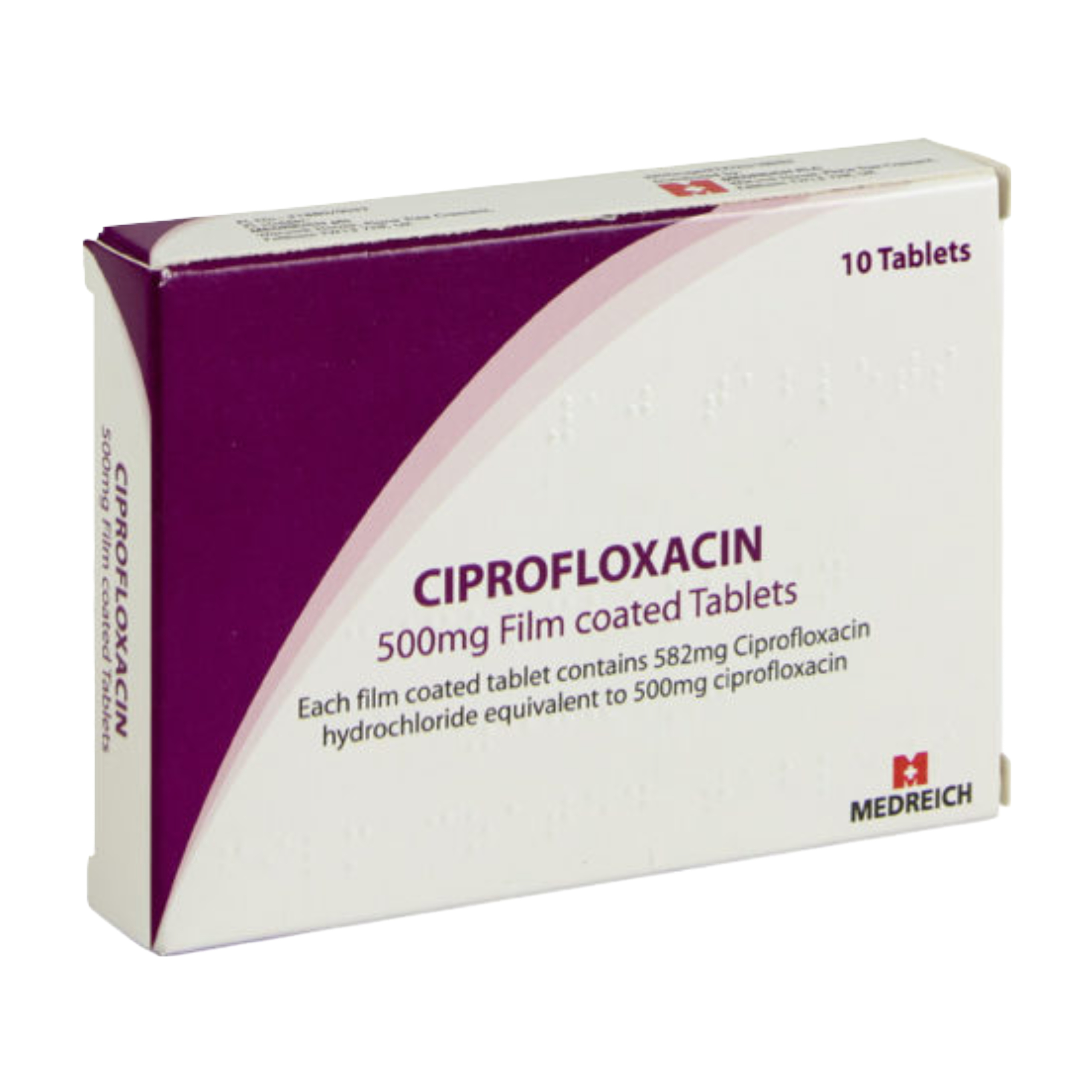
Ciprofloaxin 500mg Tablets

Fastest delivery:
Order by 12:00pm
-

Free delivery over £50
Fast, tracked delivery from £2.95. Arrives as quickly as the next working day in discreet packaging.
-

100% UK-based pharmacy
Our team of doctors and prescribers, and our support staff, are all UK-based.
-

Free support and advice
We're on hand to offer free support and advice by email and telephone (Mon - Fri 08:30 - 17:00).
-

We’re rated 4.9 out of 5
based on over 17,000 reviews collected on Google and Reviews.io.
Description
Ciprofloxacin for Traveller’s Diarrhoea
Ciprofloxacin is a fluoroquinolone antibiotic used to treat certain bacterial infections. It works by preventing bacteria from multiplying and spreading.
For traveller’s diarrhoea, azithromycin is generally recommended as the first line antibiotic treatment. Ciprofloxacin was previously widely used for traveller’s diarrhoea, but increasing bacterial resistance and important safety considerations associated with fluoroquinolone antibiotics mean that it is now reserved for selected circumstances where other recommended antibiotics may not be appropriate.
Should I order Azithromycin instead?
In most cases, yes. If you are looking for standby antibiotic treatment for traveller’s diarrhoea, we recommend ordering Azithromycin 500mg as the first line option.
However, every prescription is subject to an individual clinical assessment. Your consultation will be reviewed by one of our prescribers, who will determine which treatment is most appropriate and safe for you.
Your prescriber may change your treatment
If you order ciprofloxacin but our prescriber considers azithromycin to be more clinically appropriate, azithromycin may be supplied instead of ciprofloxacin.
Similarly, there may be circumstances where ciprofloxacin is considered appropriate because azithromycin or another recommended treatment is unsuitable for you.
The final treatment decision will always be based on your medical history, current medicines, allergies, travel destination and individual clinical circumstances.
Important information
Most cases of traveller’s diarrhoea are mild and resolve without antibiotics. Antibiotics should only be used when clinically appropriate, particularly because unnecessary use can contribute to antimicrobial resistance.
If you develop severe symptoms, blood or mucus in your stools, a temperature of 38°C or above, severe abdominal pain, signs of dehydration, or symptoms that do not improve, you should seek medical attention.
Warnings
- Do not take Ciprofloxacin if you experience allergic reactions to any of its ingredients.
- Do not give Ciprofloxacin to children below five years without your doctor's approval.
- Inform your doctor of any underlying medical condition that you may have.
- Inform your doctor of any prescription medication you may be using.
- Inform your doctor of your pregnancy or breastfeeding status before using Ciprofloxacin.
- Do not take Ciprofloxacin if you suffer from any kidney or neurological conditions such as epilepsy without approval from your doctor.
- Inform your doctor if your symptoms do not seem to improve or worsen after using Ciprofloxacin.
Directions
- Follow the directions given by your doctor, or read the information on the prescription label, if you are self-medicating.
- Take the tablet at the same time every day for the instructed period for maximum results.
- You can take Ciprofloxacin with or without meals.
- Do not crush or chew the tablets, instead, swallow them with plenty of water.
- Avoid dairy products such as cheese, yoghurt or milk because they can affect interfere with the chemical components in the medication.
Ingredients
- The active ingredient is Ciprofloxacin hydrochloride
- The inactive ingredients include Titanium dioxide, Hypromellose, Macrogol 400, maize starch, Microcrystalline cellulose, Magnesium stearate, Anhydrous colloidal silica, sodium starch glycolate.
Side Effects
- Nausea
- Diarrhoea
- Low blood pressure
- Joint pain
- Jaundice
- Skin rash
Most symptoms disappear after some time even without using medication. However, if the effects persist or worsen, seek immediate medical assistance.