
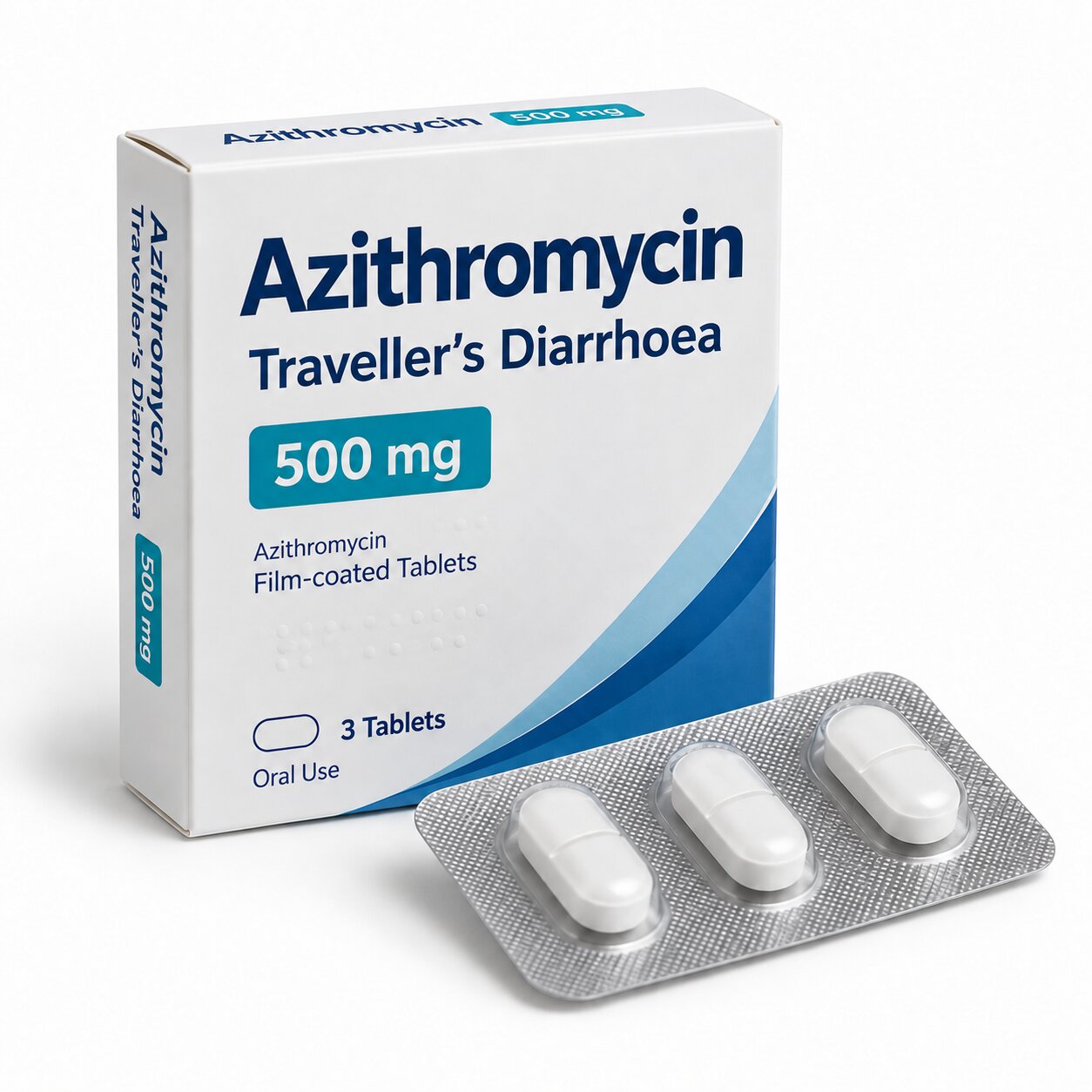
Azithromycin 500mg Tablets

Fastest delivery:
Order by 12:00pm
-

Free delivery over £50
Fast, tracked delivery from £2.95. Arrives as quickly as the next working day in discreet packaging.
-

100% UK-based pharmacy
Our team of doctors and prescribers, and our support staff, are all UK-based.
-

Free support and advice
We're on hand to offer free support and advice by email and telephone (Mon - Fri 08:30 - 17:00).
-

We’re rated 4.9 out of 5
based on over 17,000 reviews collected on Google and Reviews.io.
Description
What is Azithromycin?
Azithromycin is a macrolide antibiotic used to treat certain bacterial infections. It works by stopping bacteria from producing the proteins they need to grow and reproduce.
Azithromycin for traveller’s diarrhoea
Most cases of traveller’s diarrhoea improve without antibiotics. However, following an individual risk assessment, an antibiotic may be considered for people who are at increased risk of severe illness or who are travelling to remote or high risk locations where access to medical care may be limited.
UK travel health guidance lists azithromycin as a first line antibiotic option for traveller’s diarrhoea in appropriate patients.
How is it taken?
The exact dose and duration will be determined by your prescriber.
TravelHealthPro lists an adult treatment regimen of 500mg once daily for 1 to 3 days for traveller’s diarrhoea. Always follow the instructions provided by your prescriber and on the dispensing label.
Important
Antibiotics should only be used when clinically appropriate. Unnecessary antibiotic use contributes to antimicrobial resistance.
Traveller’s diarrhoea can also cause dehydration. Maintaining adequate fluid intake and using appropriate oral rehydration products may therefore be an important part of treatment.
Seek medical attention if symptoms are severe, persist or worsen, or if you develop significant dehydration or become seriously unwell.
Warnings
Do not take Azithromycin if:
• You are allergic to azithromycin, erythromycin or another macrolide or ketolide antibiotic.
• You have previously had a serious allergic reaction to this type of antibiotic.
Speak to your clinician before treatment if:
• You have liver or kidney problems.
• You have heart rhythm problems or have been told you have a prolonged QT interval.
• You have low potassium or magnesium levels.
• You have myasthenia gravis.
• You are pregnant, planning a pregnancy or breastfeeding.
• You are taking other prescription medicines or supplements.
Azithromycin can interact with a number of medicines, including medicines affecting heart rhythm, anticoagulants such as warfarin, digoxin, ciclosporin or tacrolimus, colchicine, some statins and certain antacids.
Directions
Take exactly as prescribed by your clinician. The usual adult treatment regimen for traveller’s diarrhoea is 500mg once daily for 1 to 3 days. Swallow the tablet with water. Azithromycin 500mg tablets may be taken with or without food. Complete the course prescribed for you.
Ingredients
Active ingredient: Each tablet contains 500mg azithromycin.
Other ingredients may vary according to the manufacturer supplied. Please refer to the patient information leaflet provided with your medicine for the complete ingredient list.
Side Effects
As with all medicines, azithromycin can cause side effects, although not everybody experiences them.
Common side effects can include:
• Feeling sick
• Being sick
• Diarrhoea
• Changes in taste
• Headache or dizziness
• Stomach discomfort
Seek medical advice urgently if you develop symptoms such as a severe allergic reaction, a fast or irregular heartbeat, yellowing of the skin or eyes, severe abdominal or back pain, severe or persistent diarrhoea, hearing problems or another serious or unexpected reaction.
FAQs
What is Azithromycin used for?
Azithromycin is an antibiotic used to treat certain bacterial infections. It may also be prescribed for traveller’s diarrhoea where a clinician considers antibiotic treatment appropriate.
How many tablets are supplied?
This treatment contains 3 x Azithromycin 500mg tablets.
How do I take Azithromycin for traveller’s diarrhoea?
Take the medicine exactly as instructed by your prescriber. Current UK travel health guidance lists an adult regimen of 500mg once daily for 1 to 3 days when azithromycin is prescribed for traveller’s diarrhoea.
Can I take Azithromycin with food?
Azithromycin 500mg tablets can be taken with or without food.
Does everyone with traveller’s diarrhoea need antibiotics?
No. Traveller’s diarrhoea is often self limiting. Antibiotics should be considered carefully because inappropriate antibiotic use can contribute to antimicrobial resistance.
Do I need a prescription?
Yes. Azithromycin is a prescription only medicine in the UK. Your consultation must be clinically assessed and approved before treatment can be supplied.
What should I do if my symptoms are severe?
Seek medical attention if you become seriously unwell, cannot maintain adequate hydration, develop severe or persistent symptoms, or are otherwise concerned about your condition.
